

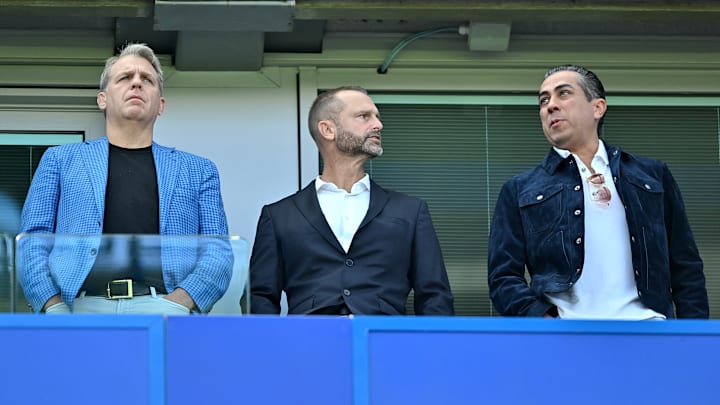
Since Chelsea’s takeover by BlueCo in 2022, the Blues’ fortunes have changed, and not for the better. As much as the West Londoners would like to separate themselves from their North London rivals, Arsenal, they now find themselves in a similar situation to the one the Gunners were in during the 2010s.
In the later years of Arsene Wenger’s reign, there was a constant narrative around Arsenal narrowly missing out on world-class talent such as Cristiano Ronaldo, Zlatan Ibrahimovic, Kylian Mbappe, and others. The legendary manager frequently addressed the media about how close the club came to signing elite players, only for deals to fall through.
Chelsea are in a very similar position today. Gone are the days when Chelsea were a superpower in the transfer window, able to secure elite players with minimal negotiation and integrate them straight into the first team.
Since BlueCo’s arrival, Chelsea have consistently been linked with top talents but rarely end up signing them. Examples include Rayan Cherki, Michael Olise, and Antonio Semenyo, to name a few. It could be argued that these links exist largely for PR purposes, especially given how similar the reasons are whenever the Blues pull out of potential deals.
Why Chelsea’s BlueCo era feels uncomfortably like 2010s Arsenal
From 2010 to 2021, Arsenal never truly challenged for the Premier League title. During those 11 years, their best league finish was second, when they ended the season behind Leicester City. And even in that campaign, they really were never in the mix.
Aside from that season, Arsenal never finished as runners-up and, on multiple occasions, finished outside the top four, ending the season in eighth place twice. They were largely stuck in a cycle of chasing Champions League qualification rather than competing for titles.
Fast forward a few years, and Chelsea are now on the same merry-go-round, chasing top four spots, missing out on qualification in the first two seasons under the new ownership, and only qualifying once, finishing fourth last season under Enzo Maresca. It is worrying if you are a supporter of the West London club, who won the Champions League just four years back.
After Wenger left Arsenal, squad planning and depth were poorly managed by the board for several years. There was a lack of star signings capable of pushing the team to the next level, and even when a marquee player arrived, the bench strength was not at the level required for an elite club competing on multiple fronts. This is perhaps the issue that resonates most with Chelsea fans today.
Over a short span of three and a half years, Behdad Eghbali and Co. have spent more than £2 billion on player signings, bringing in 53 players. While the new ownership has reduced the net spend to just over £1 billion, serious questions remain about squad balance and depth. Key areas are still unaddressed, and improvements are clearly required despite spending so much money on transfers.
Although Chelsea have won two trophies under the new ownership, the level and status of the UEFA Conference League are not aligned with the Blues' historical standards, especially given that they were heavy favourites to win the competition before it even began. The FIFA Club World Cup, meanwhile, is a trophy that could arguably become more prestigious in the future. However, the broader issues of squad building, club culture, and growing fan unrest remain strikingly similar between the two London clubs, albeit at different points in time.
 Add us as a preferred source on Google